
Key Takeaways
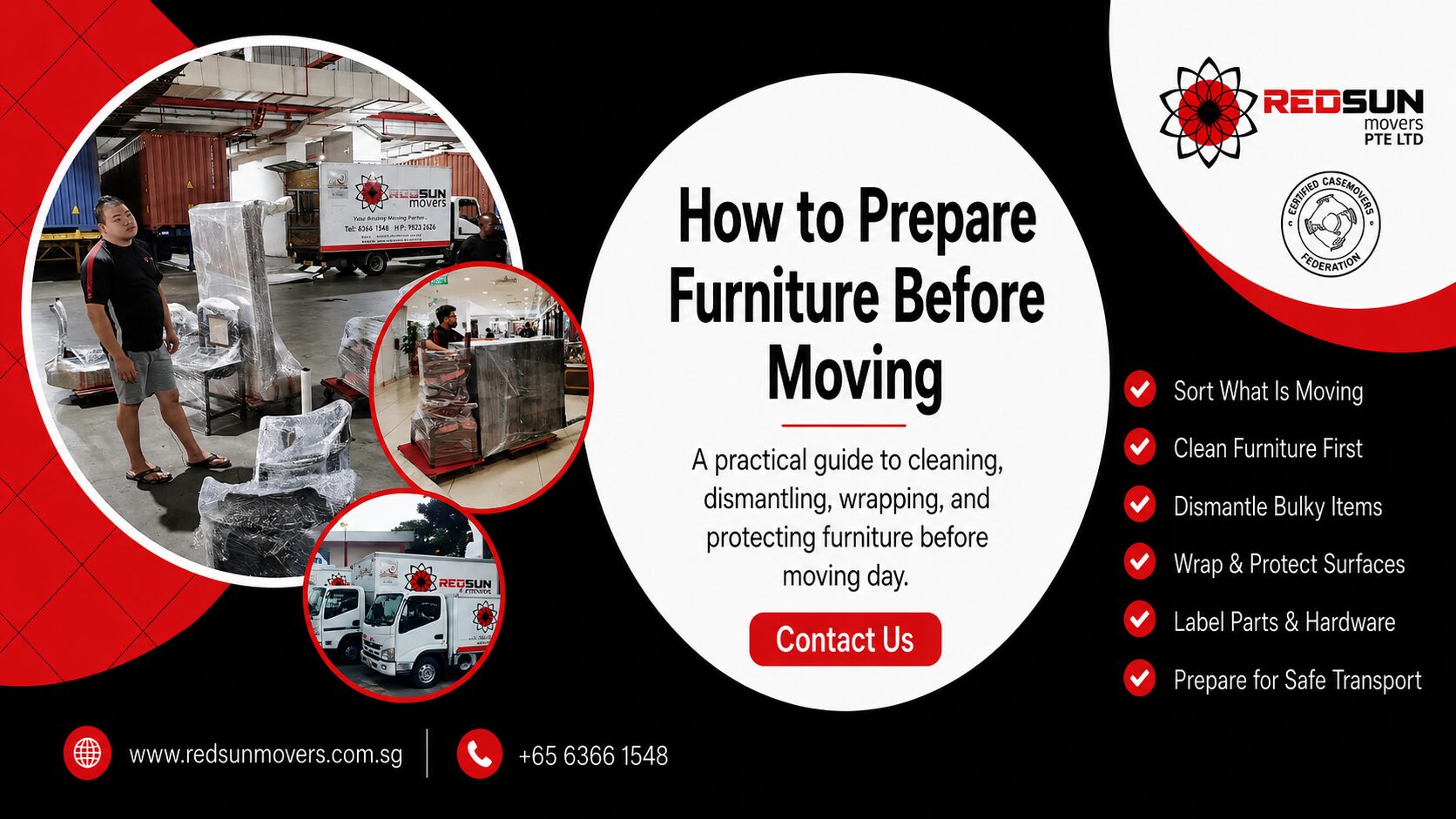
- Careful furniture preparation in advance, cleaning, dismantling, wrapping, and labeling, can greatly reduce scratches, dents, and delays on the moving day.
- Deciding what furniture actually needs to be moved (and measuring it against your new space) is the first step in ensuring a smooth furniture move.
- Different materials (wooden furniture, glass, sofas, mattresses) need different protection methods for safe transit.
- Clear labeling makes reassembly faster and less stressful at your new location.
- For bulky, fragile, or hard-to-access items in HDB flats, engaging professional movers can help ensure greater safety, convenience, and peace of mind.
Why Furniture Preparation Matters Before a Move
Furniture is usually the bulkiest, most damage-prone part of any home move in Singapore. Without proper preparation, surfaces, corners, and legs are exposed to scratches, chips, and dents during loading, transport, and unloading. A UK survey found that nearly 48% of people experienced breakages during a move, with furniture highlighted as one of the most commonly damaged items.
Well-prepped furniture pieces are easier and safer for movers to handle through tight HDB flat corridors, narrow lifts, and stairwells. Advance furniture preparation also reduces moving-day delays, last minute surprises like emergency dismantling, and the risk of blocking hallways. A solid plan and a clear step-by-step approach can make the whole moving process smoother and more stress free for everyone.
Start by Sorting Which Furniture Is Actually Moving
The first practical step is to decide which furniture should be relocated to your new home and which should be sold, donated, or discarded. Declutter unwanted items before packing to reduce load and save money on transport costs. Create a furniture list to track items being moved. Go room by room and note every major piece of furniture, from your living room sofa to bed frames, dining tables, wardrobes, and desks.
Assess the condition honestly. Leave behind broken, unstable, or heavily worn furniture. Measure furniture dimensions: height, width, and depth – and compare them against your new space. Measure doorways, hallways, and staircases before moving to avoid fitting issues. Use a detailed floor plan to map furniture placement at the new location. For larger items, measure diagonal dimensions to account for turning corners, and consider obstacles like light fixtures when measuring.
This sorting step alone can make a big difference in keeping costs and effort under control.
Clean Furniture Before Packing or Wrapping
Clean furniture to prevent dirt transfer during transport. Dust and grit trapped under wrapping can scratch delicate finishes during the journey. Use a damp cloth to clean wooden surfaces before moving, and wipe down metal frames and laminate surfaces with a mild cleaner. Allow everything to dry completely before placing any covers back on the furniture. If needed, you can also consider getting a sofa deep cleaning service done before your move.
Remove all items from drawers to reduce weight during transport. Empty cabinets, sideboards, TV consoles, and desks so no loose items rattle around inside. Remove loose shelves from cabinets and bookcases and pack them separately.
Vacuum upholstery to remove dust before packing. Inspect furniture for loose screws or structural weaknesses so you can address them before wrapping. This step is equally important for upholstered items and wooden furniture alike – especially in Singapore’s humid climate, where trapped moisture can lead to mold or warping.
Should You Dismantle Furniture Before Moving?
Not every piece of furniture needs to be dismantled, but many bulky items are safer to move in parts. Disassembling furniture makes it easier to transport and reduces the risk of bumping walls or door frames. Common items to disassemble include bed frames and tables, modular wardrobes, L-shaped desks, and tall shelving units.
Benefits of dismantling:
- Easier to carry through narrow HDB flat corridors and tight spaces
- Reduced strain on joints and hardware
- Lower risk of damage to the furniture and the building
Secure all hardware in labeled bags to keep them organized and avoid loss. Tape each plastic bag to a clearly marked panel from the same piece of furniture. Taking “before photos” of complex furniture setups aids in reassembly after moving – this is particularly helpful for bunk beds and modular shelving.
If you are uncomfortable dismantling expensive or intricate items, leave this part to professional movers who have the right tools and experience.
How to Wrap Furniture Properly for Moving
Different materials need different protection, and combining padding with plastic stretch wrap is often the most effective approach. Using moving blankets and bubble wrap protects surfaces from scratches, while stretch wrap holds everything in place.
Labels such as “FRAGILE – GLASS” or “THIS SIDE UP” can be written directly on the wrap or on masking tape applied to it. The following subsections cover how to wrap furniture for each major material type.
Wrapping Wooden Furniture
Wooden furniture like solid wood dining tables, sideboards, and wooden bed frames is prone to scratches and dents. Use moving blankets to protect wooden furniture surfaces as the first layer, then secure them gently with packing tape or stretch wrap. Never apply tape directly to bare wood to avoid peeling or discoloration.
Add extra padding to corners, carved edges, and decorative pieces to prevent chipping. Avoid placing plastic wrap directly on polished wood for extended periods, as under humid conditions condensation can damage delicate finishes. Use cardboard sheets between stacked wooden surfaces to prevent rubbing during transport.
Wrapping Glass and Mirror Surfaces
Glass tables, glass tabletops, coffee tables with glass inserts, and wall mirrors all require special handling. Remove detachable glass components from the main piece of furniture before wrapping. Packing glass items with bubble wrap helps prevent shattering during a move.
Cover glass with packing paper or soft cloth first, then add cardboard cut to size over both sides, and finish by wrapping the bundle in bubble wrap. Wrap glass items in bubble wrap and cardboard for protection. Clearly label wrapped glass as “FRAGILE – GLASS” and mark which side is up. Flat glass pieces should be transported upright where possible rather than laid flat under heavy items.
Wrapping Sofas and Upholstered Furniture
For fabric sofas, armchairs, dining chairs with fabric seats, and ottomans, remove and pack loose cushions separately in clean sturdy boxes or plastic bags to free up empty spaces and keep them clean. Clean plastic stretch wrap or sofa covers can protect fabric from dust, rain, and stains.
For leather sofas, use furniture blankets or breathable covers rather than tight plastic wrap, as plastic can trap heat and moisture and potentially damage natural materials. Protect the legs and armrests with padding before moving through narrow spaces and doorways.
Wrapping Mattresses
Mattresses easily absorb dust, moisture, and odors if left uncovered. Wrapping mattresses in plastic bags protects them from dust and moisture during the move. Use purpose-made mattress covers or heavy-duty shrink wrap sized for your mattress.
Seal the ends with packing tape once the mattress is inside. Many movers prefer to move mattresses upright to save space and prevent bending. Avoid placing sharp or heavy items directly against a wrapped mattress in the moving truck.
Label Furniture Parts and Hardware Clearly
Clear labeling speeds up reassembly and helps ensure each piece ends up in the correct room. Label all parts and hardware for easy reassembly using simple notes such as “Master bedroom bed – headboard” or “Study – desk side panel (left).”
- Put screws, bolts, and small brackets into separate, labeled bags for each piece
- Keep all hardware bags together in one small box
- Mark large wrapped items with their destination room (“Living Room”, “Bedroom 2”) to help movers place them correctly
How to Protect Furniture During Loading and Transport
This section focuses on preparation decisions that affect how furniture behaves once loaded. Load heavy items first to maintain truck balance: place the heaviest, most stable items like solid cabinets at the base. Arrange lighter items on top to prevent crushing fragile items below.
Use straps to secure furniture in the moving truck. Straps secure furniture during transport to prevent tipping. Fill gaps with soft items or packing peanuts to minimize movement – rolled blankets and pillows work well to cushion empty spaces between furniture.
Do not leave drawers partly filled “to save time.” The extra weight can strain runners and make heavy furniture harder to lift. Use furniture dollies to move heavy items easily from room to vehicle. Place protective materials like blankets, cardboard, or foam between items to prevent rubbing during long distance moving. Floor runners along corridors protect both your flooring and furniture legs during the move.
Furniture Preparation Checklist Before Moving Day
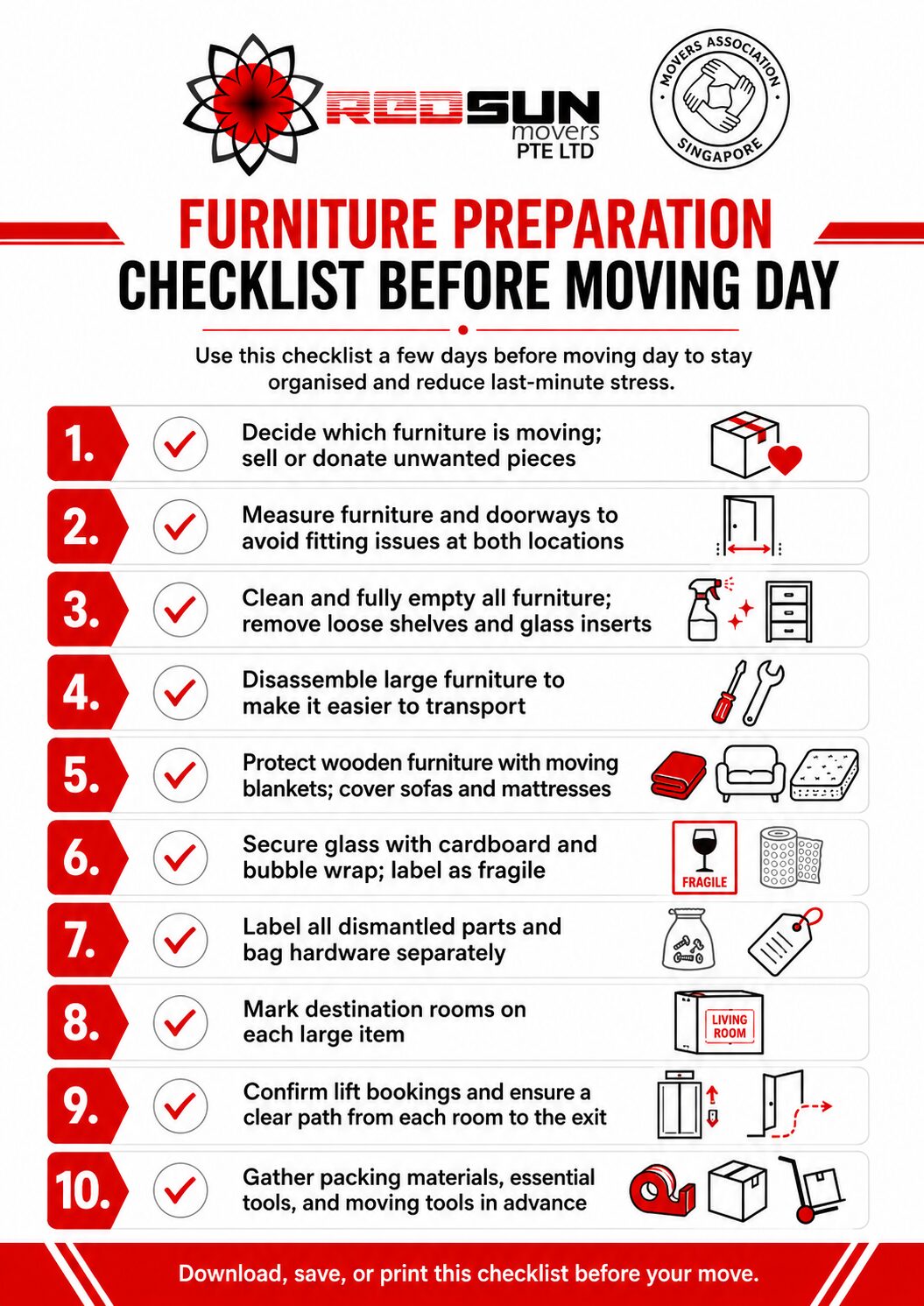
Use this checklist a few days before the moving day to keep yourself on track
- Decide which furniture is moving; sell or donate unwanted pieces
- Measure furniture and doorways to avoid fitting issues at both locations
- Clean and fully empty all furniture; remove loose shelves and glass inserts
- Disassemble large furniture to make it easier to transport
- Protect wooden furniture with moving blankets; cover sofas and mattresses
- Secure glass with cardboard and bubble wrap; label as fragile
- Label all dismantled parts and bag hardware separately
- Mark destination rooms on each large item
- Confirm lift bookings and ensure a clear path from each room to the exit
- Gather packing materials, essential tools, and moving tools in advance
Common Furniture Prep Mistakes to Avoid
Avoiding a few common mistakes can prevent unnecessary damage and last-minute panic:
- Forgetting to empty drawers and cabinets
This makes pieces heavier and can damage hinges during heavy lifting
- Wrapping damp furniture with plastic wrap
Trapped moisture leads to mold or warping, especially in Singapore’s humidity
- Losing screws or fittings
Hardware not bagged and labeled properly during dismantling causes reassembly headaches
- Skipping measurements
Bulky items that do not fit through lifts or HDB flat entrances create costly delays
- Leaving fragile parts exposed
Unwrapped glass doors, mirror panels, and decorative items are a frequent cause of breakage
Plan Your Home Move Properly
Furniture preparation is one part of a broader moving plan. It should be scheduled alongside packing boxes, arranging building access, confirming lift bookings, and planning utilities at the new place. Careful planning across all these areas makes the overall process smoother.
If you want a full, room-by-room planning overview, a comprehensive house moving guide for Singapore covers the broader residential relocation process in detail.
When Professional Help May Be Useful
While many furniture preparation steps are DIY-friendly, some situations benefit from hiring professionals. Consider engaging help for:
- Oversized wardrobes, heavy wooden sideboards, pianos, or large glass tables
- HDB flats and older condominiums with tight corridors, staircases, or service lifts
- High value items like antique furniture or decorative pieces requiring special handling
- Time-constrained moves where proper preparation cannot be completed alone
Professional movers reduce the risk of furniture damage. Movers use specialized equipment for safe transport, including furniture dollies, lifting straps, and padding. Hiring movers can save time and physical strain.
Furthermore, professional movers are trained in safe lifting techniques, and movers can handle heavy and bulky furniture efficiently. Lifting straps reduce back strain when moving heavy furniture, and using proper tools and equipment aids in safely moving heavy furniture.
For moves involving bulky or delicate items, working with experienced furniture movers in Singapore can help reduce risk. Whether you are engaging a full-service mover or arranging transport only, the key is matching the service level to your furniture’s needs. Hiring movers is particularly worthwhile for moving furniture long distance or when you need safe transport for high value items.
If you need support with a complete home relocation, our house movers in Singapore team can assist with the full process.
Frequently Asked Questions
Start basic preparation, sorting what to keep, measuring large items, and planning dismantling – about 2–3 weeks before your move. Handle cleaning, emptying drawers, and dismantling larger furniture pieces in the final 5–7 days so furniture remains usable for as long as practical.
Very large homes may need a longer lead time to avoid rushed, last-minute work that introduces risk.
It is usually recommended that you empty wardrobes, chests of drawers, and consoles completely to reduce weight and protect hinges and runners. Leaving loose items inside furniture increases strain during heavy lifting and makes safe stacking more difficult.
Plastic wrap helps keep dirt and moisture off but does not provide real impact cushioning on its own. Combine it with padding such as moving blankets, foam, or cardboard – especially for wood furniture and exposed corners.
Wrapping bare wood tightly in plastic for long periods in humid weather can cause condensation; padding should always go on first to protect surfaces.
Keep these ready: a basic screwdriver set, Allen keys, a small adjustable spanner, zip-lock bags, permanent markers, and strong packing tape for securing padding. Pack these in a separate “tools box” that travels with you.
Furniture sliders reduce friction on floors when moving items across rooms. A small trolley or furniture dollies simplify moving heavy objects over short distances. A professional mover will bring all these along with them.
Create a room-by-room inventory list covering each major piece of furniture and any dismantled parts or hardware bags. Label each item with its destination room and a simple code (BED R-1| BATH R-1) to cross-check against your list. Secure items with visible tags so nothing gets misplaced.