
Key Takeaways

  • Price alone is not enough to compare a moving quote. Homeowners must compare scope, manpower, access conditions, timing, liability, and other factors side-by-side before choosing a mover.
  • All quotes must be based on the same inventory list and property details for a fair, like-for-like comparison. Without this, the cheapest option will almost always look better on paper.
  • Common hidden costs include stair charges, long carry fees, packing materials, last-minute additions, and after-hours surcharges that only appear on the final bill.

Moving quotes should clearly itemize all included services, from packing and unpacking through to furniture disassembly, wrapping, and reassembly. Using a simple checklist and asking the right questions before accepting any free quote can greatly reduce surprise costs on the moving day and help save money and time.

Introduction: Why Moving Quotes Can Be Confusing

Most Singapore homeowners collect two to four moving quotes before a move. While the totals may look similar, the services behind those numbers can differ drastically. One quote might cover full service packing, dismantling, and protection and another might only cover transport and basic loading, leaving everything else as extras billed on the day.

This article is a practical comparison guide focused on how to evaluate quotations fairly. It is not a full pricing guide for moving costs in Singapore. Whether you are comparing local moves, planning a regional relocation, or reviewing international moving quotes from different movers, the same principles apply. By the end of the article, you will have a step-by-step structure and a simple checklist to compare movers on equal terms.

Why Comparing Moving Quotes Properly Matters

A cheaper initial quote can end up costing more if important details were left out at the start. Hidden charges often come from access issues, extra items, additional manpower, or services that were assumed but not included. This is why a written quotation with a clear breakdown is necessary before a move. 

Careful comparison helps you:

  • Avoid hidden costs such as stair charges, condo management charges, and overtime fees. 
  • Understand what is truly included before the moving day, reducing last-minute negotiations at the loading bay
  • Match service level to risk, especially when moving valuable electronics, antiques, or business equipment
  • Identify professional movers who provide transparent pricing and are confident enough to itemize their scope of work in writing

Itemized quotes help identify potential hidden costs early. Hidden fees often arise from additional services not listed in quotes, so clarity at this stage saves both money and stress.

Don’t Compare Based on Price Alone

For example, two S$900 quotes for a 4-room HDB move can represent very different work. One may include professional packing, dismantling of beds and wardrobes, wrapping of all furniture, and protective floor mats. The other may cover transport and basic loading only, with boxes, tape, mattress covers, and piano handling billed separately.

A lower price may indicate fewer included services, lighter manpower, or more exclusions. Before accepting the lowest quote, check what is excluded and whether the scope matches the other quotations you are comparing. 

It also helps to confirm whether the quote is fixed, estimated, or subject to revision after a survey or on moving day.  

Binding estimates guarantee a fixed price based on the agreed scope of work, regardless of actual weight or volume. This may include: 

  • Volume (not always weight for local moves)
  • Access conditions (stairs, lift availability)
  • Agreed services (packing, dismantling, etc.)

Non-binding estimates may change based on actual weight and services used. 

Binding not-to-exceed quotes (maximum cap quotes) Binding not-to-exceed quotes set a maximum price ceiling. You will not pay more than the quoted amount, and may pay less if the actual volume is lower.

Knowing which type you have received makes all the difference when comparing moving company quotes.

What to Compare in a Moving Quote

It is helpful for you to treat each subsection below as a checklist item. Put two or three quotes side-by-side and mark each point as “Included,” “Not included,” or “Extra charge.” The same structure works for local moves, office moves, and cross-border move quotations.

Scope of Services Included

Scope is often the biggest difference between similar-looking quotes. Check whether each quote covers:

  • Packing and unpacking of household items
  • Provision of boxes and packing materials (cartons, bubble wrap, wardrobe boxes)
  • Dismantling and reassembly of beds, wardrobes, and shelving
  • Wrapping and protection of furniture surfaces and safe handling of delicate items
  • Floor and wall protection at both locations

Moving quotes should clearly itemize packing materials and labor costs. Many “transport only” quotes assume you pack everything yourself and exclude professional packing for TVs, mirrors, or computer equipment. 

Also confirm whether disposal, temporary storage, or handyman work are part of the same quote or billed separately as additional services. A packing service that covers fragile items may cost more upfront but prevents expensive damage claims later.

Number of Movers and Truck Size

Manpower and lorry size directly affect how long the move takes and how much physical effort falls on your family. Check:

  • The exact number of movers provided and whether a supervisor is on-site
  • Truck size (10-ft vs 14-ft vs 20-ft lorry) and whether it covers your estimated volume
  • Whether single or multiple trips are needed

Shipment volume significantly affects moving costs. One company may propose 2 movers and multiple trips, while another suggests 4 movers handle everything in a single larger truck at a slightly higher but more efficient total cost. More movers also reduce damage risk when handling heavy fridges, large printers, or bulky furniture.

Property Type and Access Conditions

Accurate quotes in Singapore depend heavily on whether the property is HDB, condo, or landed. Access conditions are a frequent source of hidden surcharges, so confirm whether quotes account for:

  • Narrow corridors and limited lift size
  • Long push from loading bay to unit entrance
  • Staircase use if no lift is available
  • Condo management time windows and lift booking requirements

Access fees may apply if the crew must navigate stairs or long carries during the move. Property type and access can change both the scope and final cost of a move. To compare quotes fairly, send the same photos or short videos of corridors, lifts, and loading areas to every mover so they are quoting on the same conditions. 

Timing and Scheduling

Date and timing affect both availability and pricing. Peak moving season runs from May to September in Singapore, coinciding with school holidays and lease cycles. Check:

  • Whether the quote is tied to a specific moving date or valid across a range
  • Weekday vs weekend pricing differences
  • Condo or office building restrictions (e.g., moves only 9am–5pm)
  • After-hours or public holiday surcharges

Urgent or weekend moves may carry surcharges that should be listed clearly in the quotation. Make sure all quotes are based on the same moving date and time so you are comparing like-for-like. 

Special or Fragile Items

Pianos, safes, aquariums, servers, medical equipment, and large flat-screen TVs all need special handling and careful handling beyond what standard movers handle. Check whether:

  • Special items are listed line-by-line with their own handling charges
  • The mover accepts liability for these items or requires extra insurance coverage
  • Professional packing or crating is needed as a separate purchase

Insurance and liability terms should be treated as part of the comparison, not as an afterthought, especially for fragile items and expensive equipment. Always check what level of protection is included and whether any exclusions apply. 

Inclusions, Exclusions, and Extra Charges

Every quote should clearly label what is in the base price, what is excluded, and which situations trigger extra fees. Common hidden fees to check for include:

  • Stair carry beyond a certain floor
  • Long carrying distance from loading bay to unit
  • Fuel surcharges, which can increase moving costs unexpectedly
  • Destination handling fees, which are often omitted from initial quotes

Extra trips, packing materials, and after-hours work

Ask for a written list of potential surcharges even when the company advertises a free quote and “no hidden fees.” Challenge vague lines like “miscellaneous charges” and ask for specific conditions and rates. If one mover is very specific about exclusions and another is completely silent, be cautious about the silent one.

Are You Comparing Like-for-Like Quotes?

Fair comparison only works if every quote covers the same scope of work. It is important to check that all quotes cover the same list of services for accurate comparison. Comparing multiple quotes helps identify potential hidden costs, but only when the baseline is identical.

Prepare a standard inventory list with the same photos and move details, then send exactly the same information to at least three movers. Get at least three moving quotes to compare services and prices properly. If one quote is based on fewer boxes, fewer bulky items, or easier access assumptions, its total will naturally look cheaper but be inaccurate.

A legitimate moving quote includes a pre-move survey, whether in person or via video. Inspecting items in person can provide more accurate estimates for moving costs and removes guesswork from both sides. If inventory or access details change, ask all movers to revise their quotations so comparisons stay aligned.

Questions to Ask Before Choosing a Quote

Use these questions in an email or WhatsApp chat with every moving company on your shortlist:

  • Is packing included, partially included, or excluded from the price?
  • Is furniture disassembly and reassembly covered? Are tools supplied?
  • Are packing materials (cartons, shrink wrap, bubble wrap, wardrobe boxes) included or billed separately?
  • Are there extra charges for stairs, long push, shuttle vans, or difficult parking?
  • Is the written quote fixed, a range estimate, or subject to re-calculation on moving day?
  • What happens if inventory changes after the quote is issued?
  • Who is responsible for the move’s handling and any damage during transit?

Review customer feedback on third-party platforms to assess reliability, communication, and handling care. It is also helpful to verify the company’s credentials and business details before making your final decision.  


A Simple Checklist for Comparing Moving Quotes

Use this as a quick-reference checklist. Print it or copy it into a spreadsheet with one column per mover.
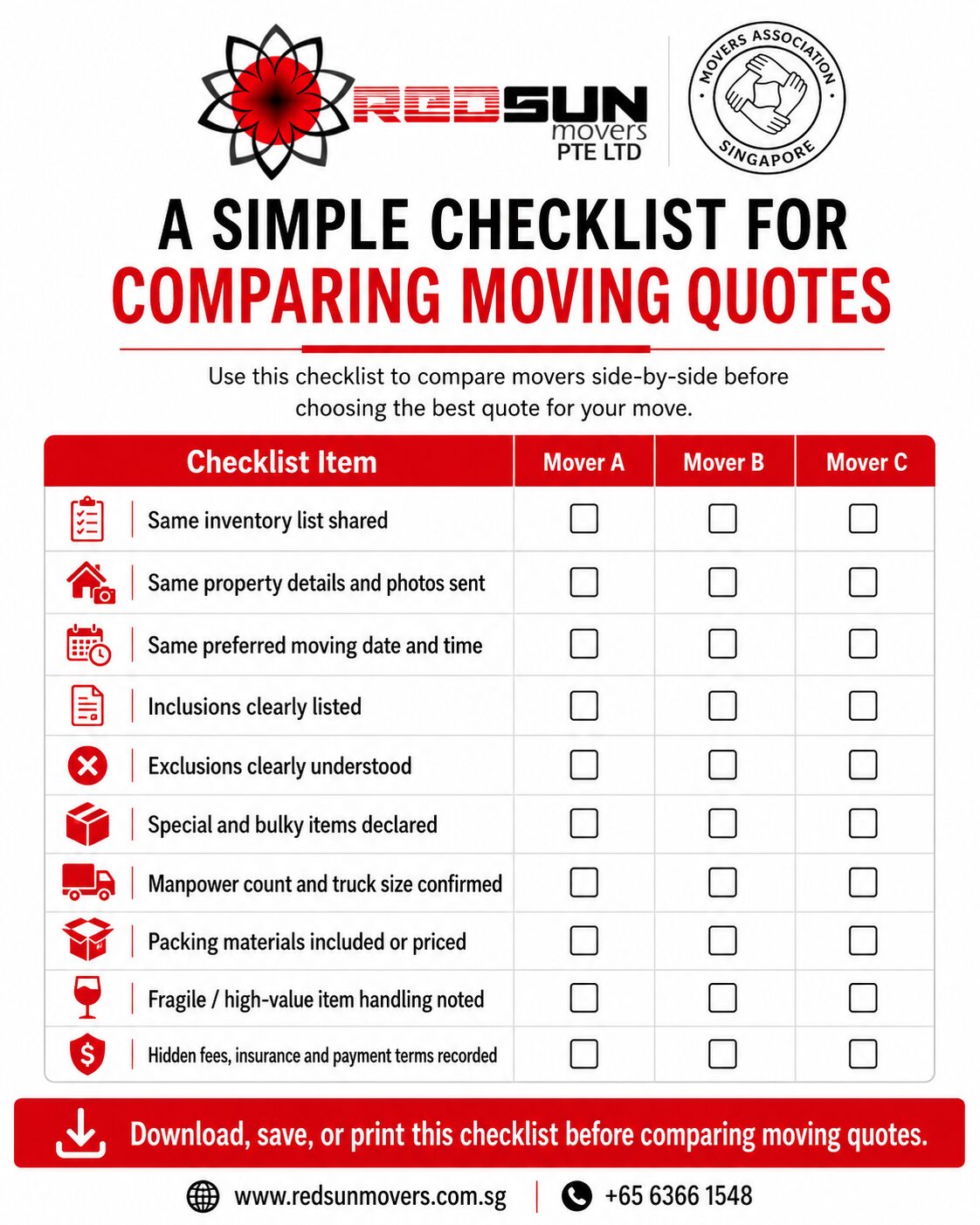
Moving quote comparison checklist


Some homeowners request as many as five quotes for broader comparison, though in practice two to three detailed, written quotes based on the same inventory usually provide enough clarity without creating analysis paralysis.

Understand the Bigger Picture Before Deciding

Comparing quotes fairly is just one part of planning a successful move. You still need to plan timelines, decluttering, labelling systems, and address changes before moving day. 

Good labelling and tracking make unpacking faster and reduce missing-item disputes. For a step-by-step overview beyond quotations, refer to our house moving guide in Singapore for broader preparation, scheduling, and settling-in guidance. 

When It Helps to Speak Directly with a Mover

Some moves are too complex for a one-page email quote. Office relocations, partial warehouse moves, and international shipments involving customs clearance and customs support need direct conversation. Air freight costs several times more than sea freight, and freight rates fluctuate, so international moving services require careful scoping.

Requesting a site survey or video walkthrough helps clarify inventory, access challenges, fragile items, and timing. Use these conversations to assess responsiveness, transparency, and willingness to confirm the agreed scope in writing. The goal is to choose a mover whose quotation matches your actual moving needs and expectations. 

For moves that need broader coordination beyond quotation review, speaking directly with a mover can help clarify the scope, manpower, timing, and access requirements in advance. 

Frequently Asked Questions

Get two to three written quotes based on the same inventory and moving date. This helps compare movers realistically without confusion. Shortlist movers first based on reviews and clear scopes before requesting quotes.

A moving quote should detail services like packing and unpacking, packing materials, furniture dismantling and reassembly, wrapping and protection, loading and unloading, truck size and manpower, access conditions, timing, special item handling, inclusions, exclusions, and extra charges such as stair or long carry fees.

Quotes differ due to service scope, manpower, truck size, packing services, access conditions, timing, and hidden fees. A cheaper quote might exclude packing or dismantling or assume easier access, leading to higher costs later.

Lowest quotes aren’t always the best. Compare like-for-like based on inventory, services, and conditions. Low prices may lack services or hide fees, causing higher final costs or poor service.

Ensure quotes use the same inventory, property details, and date. Check itemized services, manpower, truck size, access, timing, special items, inclusions, exclusions, and extra charges. Use a checklist and ask questions to clarify.

Request quotes 4–6 weeks before a move, or 8–12 weeks for peak or cross-border moves. Early requests secure dates and refine inventory. Late requests limit options and increase costs.

Ready to compare movers more confidently? 

Choosing the right quote is not just about price. It is about making sure the scope, access, timing, and included services match your actual moving needs. 

If you need help understanding what should be included in a quotation, our house movers Singapore team can guide you through the scope and planning requirements for your move.  

{ "@context": "https://schema.org", "@type": "FAQPage", "mainEntity": [ { "@type": "Question", "name": "How many moving quotes should I collect before deciding?", "acceptedAnswer": { "@type": "Answer", "text": "It is recommended to collect two to three written moving quotes based on the same inventory list and moving date. This makes it easier to compare services, pricing, and value fairly. Shortlist reputable movers first before requesting quotations." } }, { "@type": "Question", "name": "What should be included in a moving quote?", "acceptedAnswer": { "@type": "Answer", "text": "A comprehensive moving quote should include packing and unpacking services, packing materials, furniture dismantling and reassembly, protective wrapping, loading and unloading, truck size, manpower, access conditions, moving schedule, special item handling, inclusions, exclusions, and any additional charges such as stair or long-carry fees." } }, { "@type": "Question", "name": "Why is one moving quote cheaper than another?", "acceptedAnswer": { "@type": "Answer", "text": "Moving quotes vary based on the scope of services, manpower, truck size, packing requirements, property access, timing, and additional charges. Lower quotes may exclude services such as packing, furniture dismantling, or difficult access fees, resulting in higher final costs." } }, { "@type": "Question", "name": "Should I choose the lowest moving quote?", "acceptedAnswer": { "@type": "Answer", "text": "Not necessarily. The lowest quote may exclude important services or contain hidden charges. Compare quotes based on the same inventory, service inclusions, and moving conditions to ensure you receive the best overall value." } }, { "@type": "Question", "name": "How can I compare moving quotes fairly?", "acceptedAnswer": { "@type": "Answer", "text": "Compare quotes using the same inventory list, property details, and moving date. Review itemised services, manpower, truck size, access requirements, special item handling, inclusions, exclusions, and any additional fees. Using a checklist and asking clarifying questions can help you make an informed decision." } }, { "@type": "Question", "name": "How far in advance should I request moving quotes in Singapore?", "acceptedAnswer": { "@type": "Answer", "text": "Request moving quotes four to six weeks before your moving date. For peak periods or cross-border relocations, allow eight to twelve weeks. Requesting quotes early provides more scheduling options, improves planning, and may help secure better pricing." } } ] }

Key Takeaways

  • Careful furniture preparation in advance, cleaning, dismantling, wrapping, and labeling, can  greatly reduce scratches, dents, and delays on the moving day.
  • Deciding what furniture actually needs to be moved (and measuring it against your new space) is the first step in ensuring a smooth furniture move.
  • Different materials (wooden furniture, glass, sofas, mattresses) need different protection methods for safe transit.
  • Clear labeling makes reassembly faster and less stressful at your new location.
  • For bulky, fragile, or hard-to-access items in HDB flats, engaging professional movers can help ensure greater safety, convenience, and peace of mind.

Why Furniture Preparation Matters Before a Move

Furniture is usually the bulkiest, most damage-prone part of any home move in Singapore. Without proper preparation, surfaces, corners, and legs are exposed to scratches, chips, and dents during loading, transport, and unloading. A UK survey found that nearly 48% of people experienced breakages during a move, with furniture highlighted as one of the most commonly damaged items.

Well-prepped furniture pieces are easier and safer for movers to handle through tight HDB flat corridors, narrow lifts, and stairwells. Advance furniture preparation also reduces moving-day delays, last minute surprises like emergency dismantling, and the risk of blocking hallways. A solid plan and a clear step-by-step approach can make the whole moving process smoother and more stress free for everyone. 

Start by Sorting Which Furniture Is Actually Moving

The first practical step is to decide which furniture should be relocated to your new home and which should be sold, donated, or discarded. Declutter unwanted items before packing to reduce load and save money on transport costs. Create a furniture list to track items being moved. Go room by room and note every major piece of furniture, from your living room sofa to bed frames, dining tables, wardrobes, and desks.

Assess the condition honestly. Leave behind broken, unstable, or heavily worn furniture. Measure furniture dimensions: height, width, and depth – and compare them against your new space. Measure doorways, hallways, and staircases before moving to avoid fitting issues. Use a detailed floor plan to map furniture placement at the new location. For larger items, measure diagonal dimensions to account for turning corners, and consider obstacles like light fixtures when measuring.

This sorting step alone can make a big difference in keeping costs and effort under control.

Clean Furniture Before Packing or Wrapping

Clean furniture to prevent dirt transfer during transport. Dust and grit trapped under wrapping can scratch delicate finishes during the journey. Use a damp cloth to clean wooden surfaces before moving, and wipe down metal frames and laminate surfaces with a mild cleaner. Allow everything to dry completely before placing any covers back on the furniture. If needed, you can also consider getting a sofa deep cleaning service done before your move.

Remove all items from drawers to reduce weight during transport. Empty cabinets, sideboards, TV consoles, and desks so no loose items rattle around inside. Remove loose shelves from cabinets and bookcases and pack them separately.

Vacuum upholstery to remove dust before packing. Inspect furniture for loose screws or structural weaknesses so you can address them before wrapping. This step is equally important for upholstered items and wooden furniture alike – especially in Singapore’s humid climate, where trapped moisture can lead to mold or warping.

Should You Dismantle Furniture Before Moving?

Not every piece of furniture needs to be dismantled, but many bulky items are safer to move in parts. Disassembling furniture makes it easier to transport and reduces the risk of bumping walls or door frames. Common items to disassemble include bed frames and tables, modular wardrobes, L-shaped desks, and tall shelving units.

Benefits of dismantling:

  • Easier to carry through narrow HDB flat corridors and tight spaces
  • Reduced strain on joints and hardware
  • Lower risk of damage to the furniture and the building

Secure all hardware in labeled bags to keep them organized and avoid loss. Tape each plastic bag to a clearly marked panel from the same piece of furniture. Taking “before photos” of complex furniture setups aids in reassembly after moving – this is particularly helpful for bunk beds and modular shelving.

If you are uncomfortable dismantling expensive or intricate items, leave this part to professional movers who have the right tools and experience.

How to Wrap Furniture Properly for Moving

Different materials need different protection, and combining padding with plastic stretch wrap is often the most effective approach. Using moving blankets and bubble wrap protects surfaces from scratches, while stretch wrap holds everything in place. 

Labels such as “FRAGILE – GLASS” or “THIS SIDE UP” can be written directly on the wrap or on masking tape applied to it. The following subsections cover how to wrap furniture for each major material type.

Wrapping Wooden Furniture

Wooden furniture like solid wood dining tables, sideboards, and wooden bed frames is prone to scratches and dents. Use moving blankets to protect wooden furniture surfaces as the first layer, then secure them gently with packing tape or stretch wrap. Never apply tape directly to bare wood to avoid peeling or discoloration.

Add extra padding to corners, carved edges, and decorative pieces to prevent chipping. Avoid placing plastic wrap directly on polished wood for extended periods, as under humid conditions condensation can damage delicate finishes. Use cardboard sheets between stacked wooden surfaces to prevent rubbing during transport.

Wrapping Glass and Mirror Surfaces

Glass tables, glass tabletops, coffee tables with glass inserts, and wall mirrors all require special handling. Remove detachable glass components from the main piece of furniture before wrapping. Packing glass items with bubble wrap helps prevent shattering during a move.

Cover glass with packing paper or soft cloth first, then add cardboard cut to size over both sides, and finish by wrapping the bundle in bubble wrap. Wrap glass items in bubble wrap and cardboard for protection. Clearly label wrapped glass as “FRAGILE – GLASS” and mark which side is up. Flat glass pieces should be transported upright where possible rather than laid flat under heavy items.

Wrapping Sofas and Upholstered Furniture

For fabric sofas, armchairs, dining chairs with fabric seats, and ottomans, remove and pack loose cushions separately in clean sturdy boxes or plastic bags to free up empty spaces and keep them clean. Clean plastic stretch wrap or sofa covers can protect fabric from dust, rain, and stains.

For leather sofas, use furniture blankets or breathable covers rather than tight plastic wrap, as plastic can trap heat and moisture and potentially damage natural materials. Protect the legs and armrests with padding before moving through narrow spaces and doorways.

Wrapping Mattresses

Mattresses easily absorb dust, moisture, and odors if left uncovered. Wrapping mattresses in plastic bags protects them from dust and moisture during the move. Use purpose-made mattress covers or heavy-duty shrink wrap sized for your mattress.

Seal the ends with packing tape once the mattress is inside. Many movers prefer to move mattresses upright to save space and prevent bending. Avoid placing sharp or heavy items directly against a wrapped mattress in the moving truck.

Label Furniture Parts and Hardware Clearly

Clear labeling speeds up reassembly and helps ensure each piece ends up in the correct room. Label all parts and hardware for easy reassembly using simple notes such as “Master bedroom bed – headboard” or “Study – desk side panel (left).”

  • Put screws, bolts, and small brackets into separate, labeled bags for each piece
  • Keep all hardware bags together in one small box
  • Mark large wrapped items with their destination room (“Living Room”, “Bedroom 2”) to help movers place them correctly

How to Protect Furniture During Loading and Transport

This section focuses on preparation decisions that affect how furniture behaves once loaded. Load heavy items first to maintain truck balance: place the heaviest, most stable items like solid cabinets at the base. Arrange lighter items on top to prevent crushing fragile items below.

Use straps to secure furniture in the moving truck. Straps secure furniture during transport to prevent tipping. Fill gaps with soft items or packing peanuts to minimize movement – rolled blankets and pillows work well to cushion empty spaces between furniture.

Do not leave drawers partly filled “to save time.” The extra weight can strain runners and make heavy furniture harder to lift. Use furniture dollies to move heavy items easily from room to vehicle. Place protective materials like blankets, cardboard, or foam between items to prevent rubbing during long distance moving. Floor runners along corridors protect both your flooring and furniture legs during the move.

Furniture Preparation Checklist Before Moving Day

Furniture preparation checklist for movers


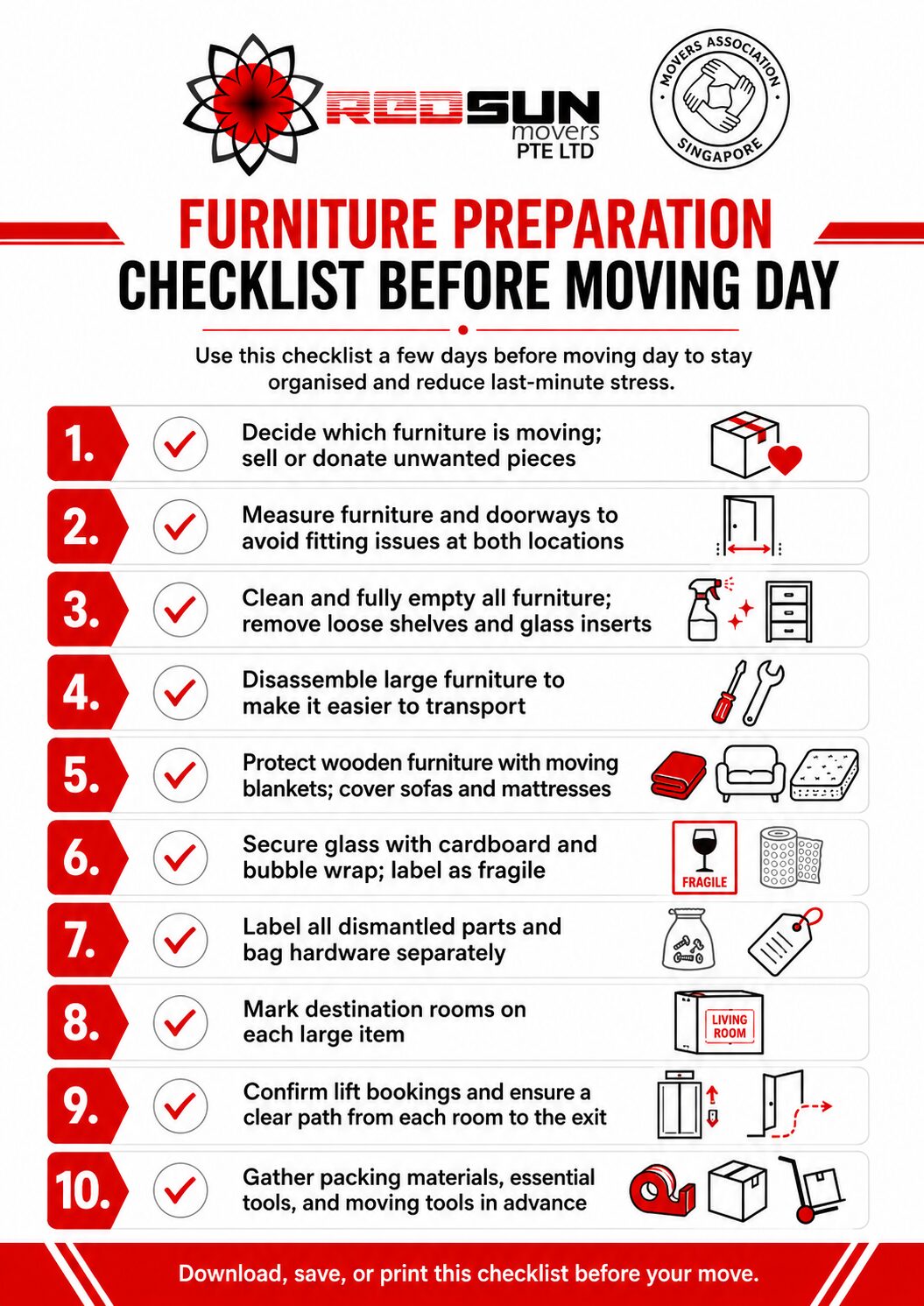
Use this checklist a few days before the moving day to keep yourself on track 

  • Decide which furniture is moving; sell or donate unwanted pieces
  • Measure furniture and doorways to avoid fitting issues at both locations
  • Clean and fully empty all furniture; remove loose shelves and glass inserts
  • Disassemble large furniture to make it easier to transport
  • Protect wooden furniture with moving blankets; cover sofas and mattresses
  • Secure glass with cardboard and bubble wrap; label as fragile
  • Label all dismantled parts and bag hardware separately
  • Mark destination rooms on each large item
  • Confirm lift bookings and ensure a clear path from each room to the exit
  • Gather packing materials, essential tools, and moving tools in advance

Common Furniture Prep Mistakes to Avoid

Avoiding a few common mistakes can prevent unnecessary damage and last-minute panic:

  • Forgetting to empty drawers and cabinets 

This makes pieces heavier and can damage hinges during heavy lifting

  • Wrapping damp furniture with plastic wrap

Trapped moisture leads to mold or warping, especially in Singapore’s humidity

  • Losing screws or fittings

Hardware not bagged and labeled properly during dismantling causes reassembly headaches

  • Skipping measurements

Bulky items that do not fit through lifts or HDB flat entrances create costly delays

  • Leaving fragile parts exposed

Unwrapped glass doors, mirror panels, and decorative items are a frequent cause of breakage

Plan Your Home Move Properly

Furniture preparation is one part of a broader moving plan. It should be scheduled alongside packing boxes, arranging building access, confirming lift bookings, and planning utilities at the new place. Careful planning across all these areas makes the overall process smoother.

If you want a full, room-by-room planning overview, a comprehensive house moving guide for Singapore covers the broader residential relocation process in detail.

When Professional Help May Be Useful

While many furniture preparation steps are DIY-friendly, some situations benefit from hiring professionals. Consider engaging help for:

  • Oversized wardrobes, heavy wooden sideboards, pianos, or large glass tables
  • HDB flats and older condominiums with tight corridors, staircases, or service lifts
  • High value items like antique furniture or decorative pieces requiring special handling
  • Time-constrained moves where proper preparation cannot be completed alone

Professional movers reduce the risk of furniture damage. Movers use specialized equipment for safe transport, including furniture dollies, lifting straps, and padding. Hiring movers can save time and physical strain. 

Furthermore, professional movers are trained in safe lifting techniques, and movers can handle heavy and bulky furniture efficiently. Lifting straps reduce back strain when moving heavy furniture, and using proper tools and equipment aids in safely moving heavy furniture.

For moves involving bulky or delicate items, working with experienced furniture movers in Singapore can help reduce risk. Whether you are engaging a full-service mover or arranging transport only, the key is matching the service level to your furniture’s needs.  Hiring movers is particularly worthwhile for moving furniture long distance or when you need safe transport for high value items.

If you need support with a complete home relocation, our house movers in Singapore team can assist with the full process.

Frequently Asked Questions

Start basic preparation, sorting what to keep, measuring large items, and planning dismantling – about 2–3 weeks before your move. Handle cleaning, emptying drawers, and dismantling larger furniture pieces in the final 5–7 days so furniture remains usable for as long as practical. 

Very large homes may need a longer lead time to avoid rushed, last-minute work that introduces risk.

It is usually recommended that you empty wardrobes, chests of drawers, and consoles completely to reduce weight and protect hinges and runners. Leaving loose items inside furniture increases strain during heavy lifting and makes safe stacking more difficult.

Plastic wrap helps keep dirt and moisture off but does not provide real impact cushioning on its own. Combine it with padding such as moving blankets, foam, or cardboard – especially for wood furniture and exposed corners. 

Wrapping bare wood tightly in plastic for long periods in humid weather can cause condensation; padding should always go on first to protect surfaces.

Keep these ready: a basic screwdriver set, Allen keys, a small adjustable spanner, zip-lock bags, permanent markers, and strong packing tape for securing padding. Pack these in a separate “tools box” that travels with you. 

Furniture sliders reduce friction on floors when moving items across rooms. A small trolley or furniture dollies simplify moving heavy objects over short distances. A professional mover will bring all these along with them.

Create a room-by-room inventory list covering each major piece of furniture and any dismantled parts or hardware bags. Label each item with its destination room and a simple code (BED R-1| BATH R-1) to cross-check against your list. Secure items with visible tags so nothing gets misplaced.

{ "@context": "https://schema.org", "@type": "FAQPage", "mainEntity": [ { "@type": "Question", "name": "How far in advance should I start preparing my furniture before moving?", "acceptedAnswer": { "@type": "Answer", "text": "Start preparing your furniture about two to three weeks before moving by sorting items, measuring large furniture, and planning any dismantling. Complete cleaning, emptying drawers, and dismantling larger pieces during the final five to seven days so they remain usable for as long as possible. Larger homes may require additional preparation time." } }, { "@type": "Question", "name": "Can I leave clothes and light items inside wardrobes or drawers when moving?", "acceptedAnswer": { "@type": "Answer", "text": "It is generally recommended to empty wardrobes, drawers, and cabinets before moving. Removing contents reduces weight, protects hinges and drawer runners, and makes lifting and stacking furniture safer during transportation." } }, { "@type": "Question", "name": "Is plastic wrap enough to protect my furniture during a move?", "acceptedAnswer": { "@type": "Answer", "text": "Plastic wrap helps protect furniture from dust and moisture but does not provide sufficient cushioning against impacts. For better protection, combine plastic wrap with moving blankets, foam padding, or cardboard, especially for wooden furniture and exposed corners. Padding should always be placed beneath the plastic wrap." } }, { "@type": "Question", "name": "What essential tools should I have on hand for preparing furniture?", "acceptedAnswer": { "@type": "Answer", "text": "Useful tools include screwdrivers, Allen keys, an adjustable spanner, zip-lock bags for hardware, permanent markers, packing tape, furniture sliders, and a small trolley or furniture dolly. Keeping these items together in a dedicated toolbox helps make packing and reassembly easier. Professional movers typically bring the necessary equipment." } }, { "@type": "Question", "name": "How can I keep track of multiple furniture pieces in a large move?", "acceptedAnswer": { "@type": "Answer", "text": "Create a room-by-room inventory of major furniture pieces and label each item with its destination room and a simple identification code. Keep dismantled hardware in clearly labelled bags and attach visible tags to furniture to help ensure everything arrives at the correct location." } } ] }