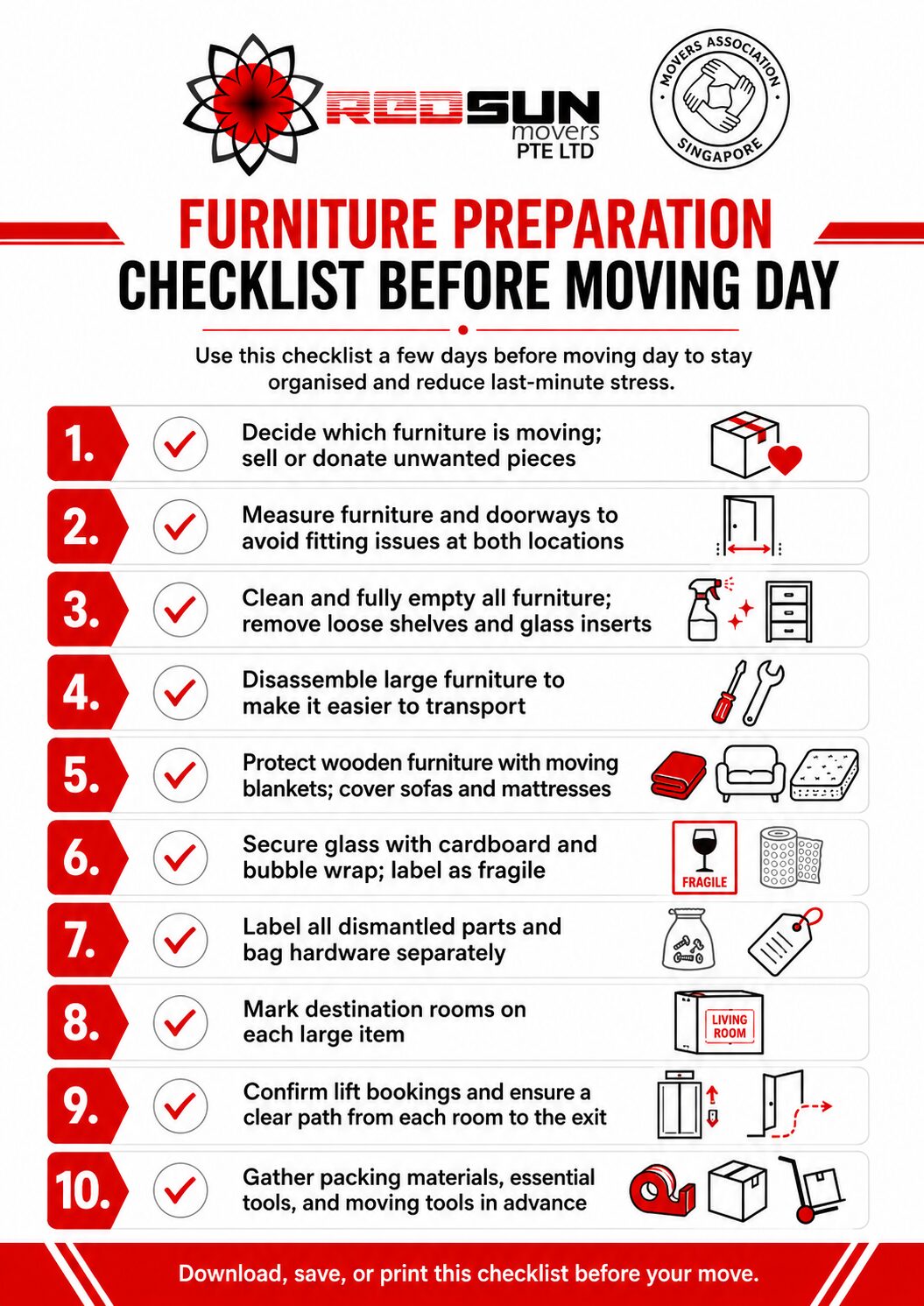

Moving house in Singapore can feel overwhelming, especially when shifting between an HDB flat, condo, landed house, new apartment or rented property. This ultimate moving house checklist focuses on what to do before moving house, from packing supplies to coordinating with utility companies and settling in. 

Key Takeaways

  • This house moving checklist for Singapore residents outlines a step by step approach anyone can follow from 4 weeks before moving day till after settling into the new home.
  • The checklist covers key information on HDB, condo, landed homes, lift booking, MCST rules, security deposit, change of address and bulky furniture disposal.
  • Planning by week reduces last minute stress, avoids common mistakes, and supports a smooth transition.
  • It also comes with a copyable moving checklist.

Moving houses in Singapore often involves coordinating with HDB or Town Councils, managing condo MCST (Management Corporation Strata Title) requirements, reserving lift access in advance, handling bulky furniture, disposing of unwanted items, and adhering to strict moving schedules.  With so many things to attend to, having a proper checklist is essential for staying organised and avoiding last-minute stresses.

Why a House Moving Checklist Matters

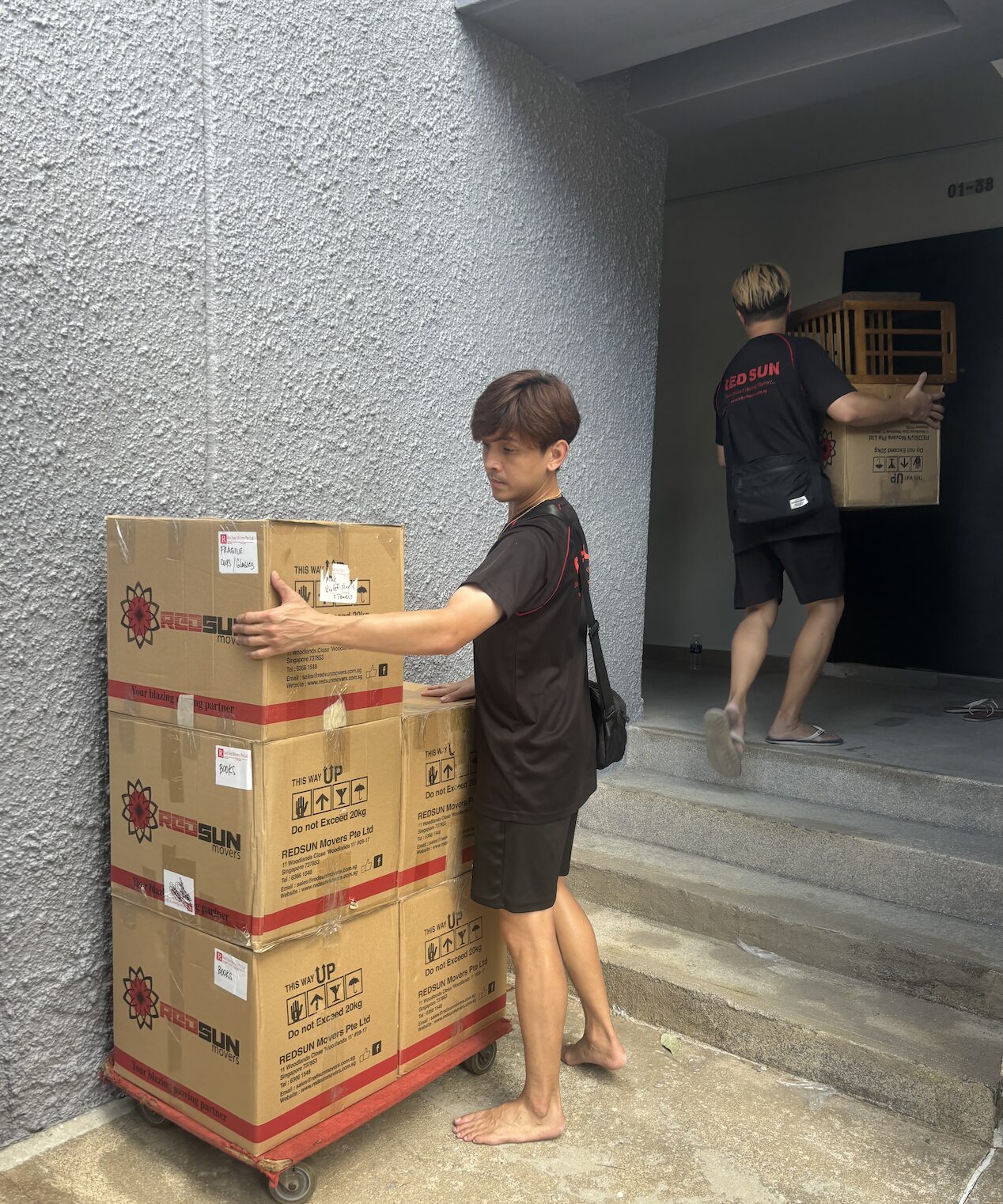
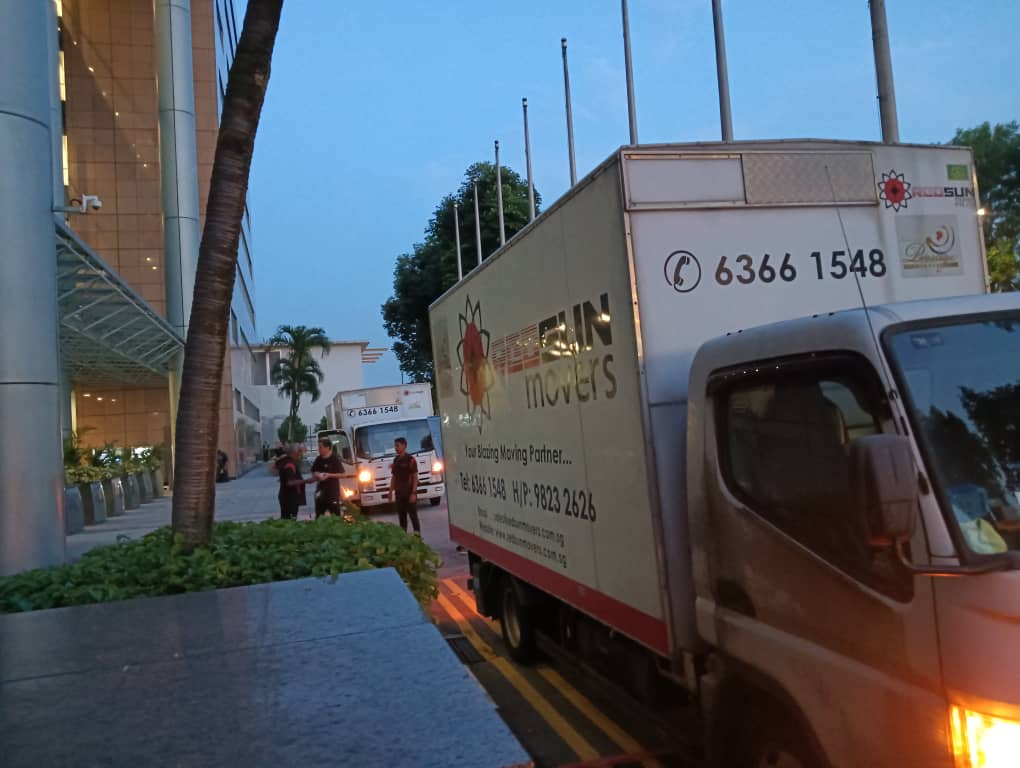
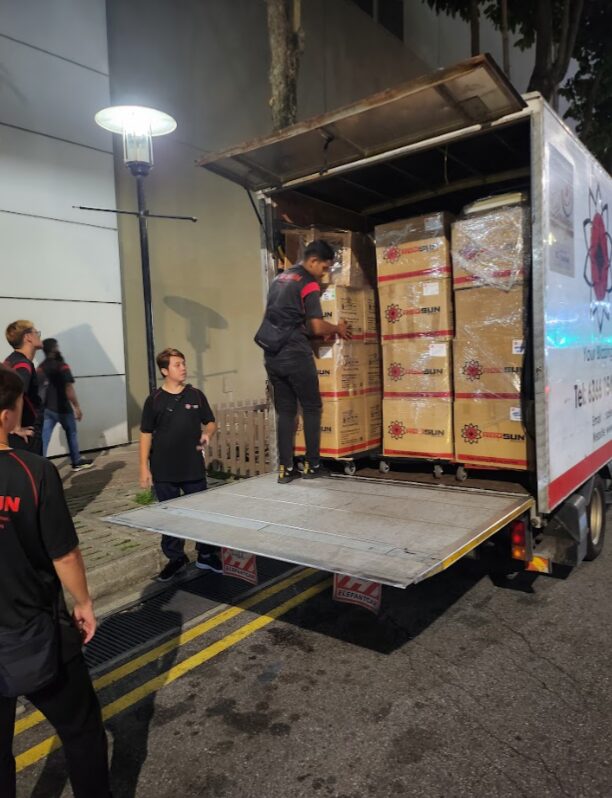
Professional movers handling packed household boxes at a condominium entrance in Singapore.


A structured house checklist can break a major relocation into smaller to do lists. To ensure a seamless transition when moving, use a timeline-based checklist organizing logistics, utility transfers, and packing.

Furthermore, creating detailed lists with tasks to be completed each week leading up to your moving day can help you stay organized and reduce last-minute stress. Accurate labelling helps track all boxes and belongings, helping you settle in efficiently. It is important to remember that different homes may require different levels of preparation, access coordination, and packing. 

Few things that requires your attention irrespective of the nature of your move are 

4 Weeks Before Moving

It’s advisable to start packing non-essential items at least four to six weeks before your moving day to avoid feeling rushed during the last couple of days before your move.

  • Confirm moving dates and check HDB, condo or estate access requirements.
  • Compare 2–3 quotes from each moving company. If you hire movers, ask about dismantling, professional packing services, transparent pricing, and insurance coverage.

Hiring professional movers can save you time and effort, allowing you to focus on other important tasks during the moving process. Furthermore, professional movers are equipped with the necessary packing materials and tools to ensure the safe and efficient transportation of your belongings. Reputable moving companies often offer insurance options, giving you peace of mind knowing your possessions are protected during the move.

  • Get rid of unwanted items before moving to save on volume/weight and reduce moving costs; items can be sold or donated.
  • When packing, sort your belongings into categories: keep, donate, sell, or discard, and be very practical with your decision-making process.

Organizing a garage sale can be an effective way to sell items in good condition that you no longer need, while donating unwanted items helps reduce clutter and supports local charities. Consider recycling or responsibly disposing of items that are beyond repair or no longer useful. 

  • Prepare an inventory. Preparing an inventory of your furniture and their measurements is essential for insurance purposes and to ensure that your items can fit in your new home.
  • Measure sofas, wardrobes, fridge, and appliances against the lift and doorway sizes.
  • Inform your landlord, real estate agent, or buyer of handover requirements.
  • Maintain a folder for quotations, receipts, floor plan, other records, forms, and your comprehensive checklist.

2 Weeks Before Moving

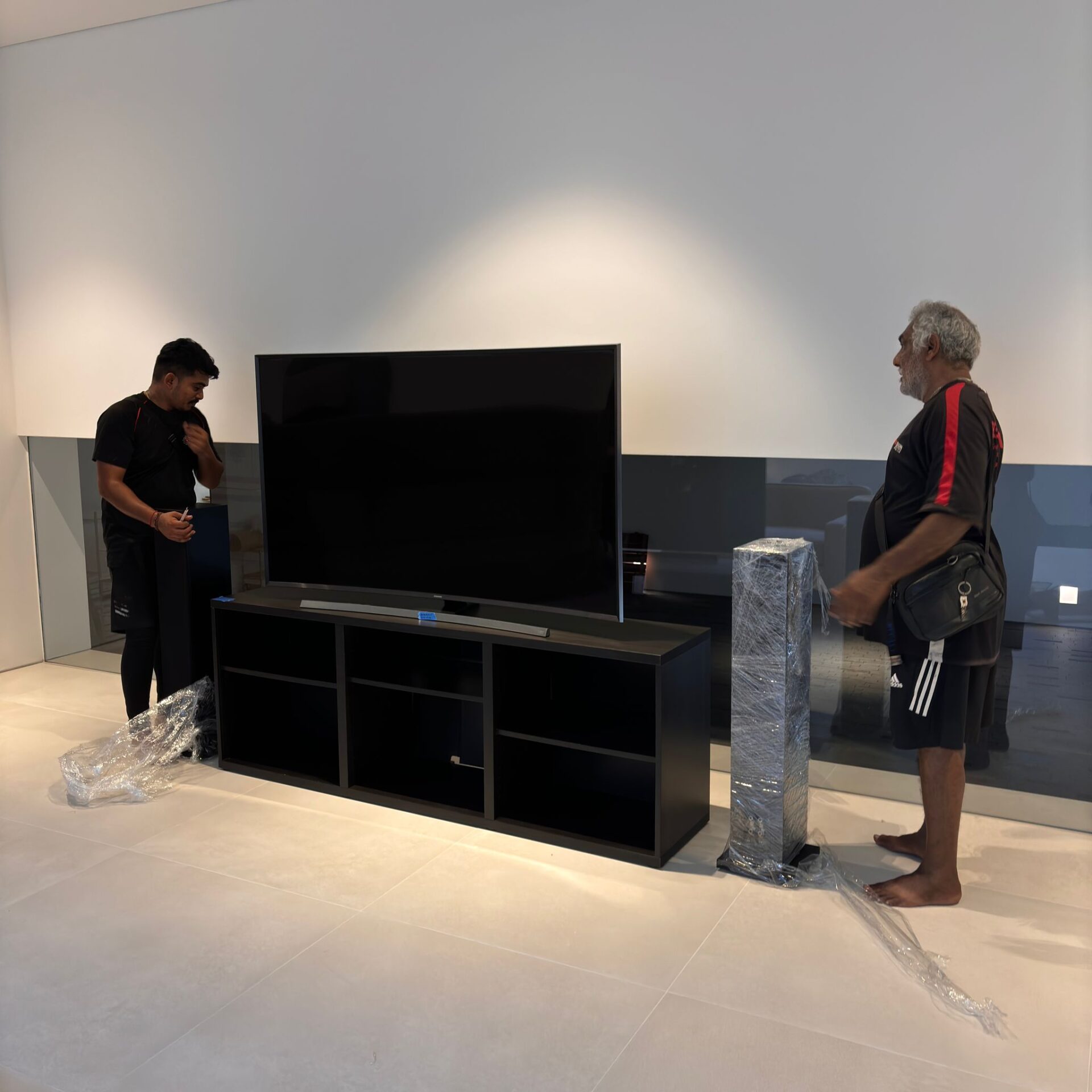
Professional movers handling a large flat-screen television during a residential move in Singapore.

Two weeks before your moving day, the focus should shift from planning to the packing process.

  • Buy moving supplies: moving boxes, packing tape, markers, shrink wrap, bubble wrap, and padding.
  • Start packing non-essential items such as books, décor, spare linen, and seasonal clothes.

Label by room, contents, and fragile items. If possible, use color-coded labels to make unpacking easier.

  • Discuss special handling for TVs, glass cabinets, pianos, aquariums, and bulky furniture.
  • Book lifts in advance. While individual condominium rules may vary, generally,  movers are allowed to operate only during weekdays from 9 am to 5 pm, and until 1 pm on Saturdays; moving on Sundays and public holidays is strictly prohibited. Confirm this with your specific property management. 
  • Residents or moving companies must submit a moving application at least a week in advance to the condominium’s management, along with a refundable deposit  (between SGD 200 and 1000) to avoid being denied access on moving day.
  • Schedule your electricity and water transfers with SP Group. Utility accounts in Singapore are property-specific and cannot be transferred to a new address; a new account must be set up via the SP Group Portal.
  • Arrange fiber broadband, gas supply activation, water heater checks and air conditioning servicing if needed.
  • Notify relevant parties such as banks, insurers, HR, schools and regular delivery providers of your impending address change.

1 Week Before Moving

One week before the move, finalize packing and prepare essential items, as most movers expect packed boxes and clear access to your property by this stage.

  • Confirm time, contact numbers, loading bay, lift booking, and moving truck access.
  • Wrap glassware, dishes, electronics, and ornaments with bubble wrap or foam; fill gaps with towels or paper.
  • Prepare an essentials bag per family member with clothes, toiletries, chargers, medicine, important documents, and daily essentials.
  • Pack a first night box with basic kitchenware, toilet paper, cleaning items, tools, and light bulbs.
  • Hand-carry jewellery, passports, laptops, and other valuables.
  • Review the floor plan for your new property so professional movers can place beds, wardrobes, and appliances quickly.
  • Clear pathways for the movers

What to Prepare the Day Before Moving

The day before moving is for final preparation.

  • Finish all packing except overnight essential items.
  • Charge phones, tablets, and power banks.
  • Prepare a kit with cutters, packing tape, markers, cloths, rubbish bags, first-aid items, and tools.
  • Set aside house keys, access cards, remotes and parking coupons.
  • Lightly clean the old house.
  • Prepare snacks and water, especially if a child, elderly parent or family member is involved.
  • Take photographs of walls, floors and fixtures for rental or sale records.
  • Take clear photographs of utility meter readings (water, electricity, gas) at both old and new properties for accurate final billings, including gas and electricity meters.

Moving Day Checklist 

Before moving in, it is important to do a complete walkthrough of your new house when it is completely empty to ensure everything is in order and to identify any issues that need to be addressed. 

Use the below moving day checklist to ensure you have a hassle-free move.

  • Meet movers early, run through the moving plan, and highlight fragile and priority items.
  • Keep valuables, important documents, and the essentials bag with you, not in the truck.
  • Ensure that the lift is lined with padding during the move to prevent damage, as failing to do so may result in forfeiting the security deposit.
  • Guide bulky furniture placement in the new home.
  • Double-check bedrooms, bathrooms, cabinets, wardrobes, balcony, and storeroom before leaving the old property.
  • Note any damages and notify the movers immediately for possible insurance claims.

After You Move In: Settling and Final Checks

It is advisable to clean your new home thoroughly before unpacking, focusing on areas that are often overlooked, such as ceiling fans, light fixtures, and shelves. Remember that the unpacking process still needs structure. 

  • Inspect delivered items against your inventory.
  • Unpack bedding, toiletries, work items, and school items first.
  • Test lights, water, gas, Wi-Fi, appliances, and air conditioning.
  • Dispose of cartons responsibly.
  • You should apply for a mail redirection service online via SingPost to ensure you do not miss any correspondence
  • Review home insurance and update sums insured if needed.

House Moving Checklist for HDB, Condo, and Landed Homes

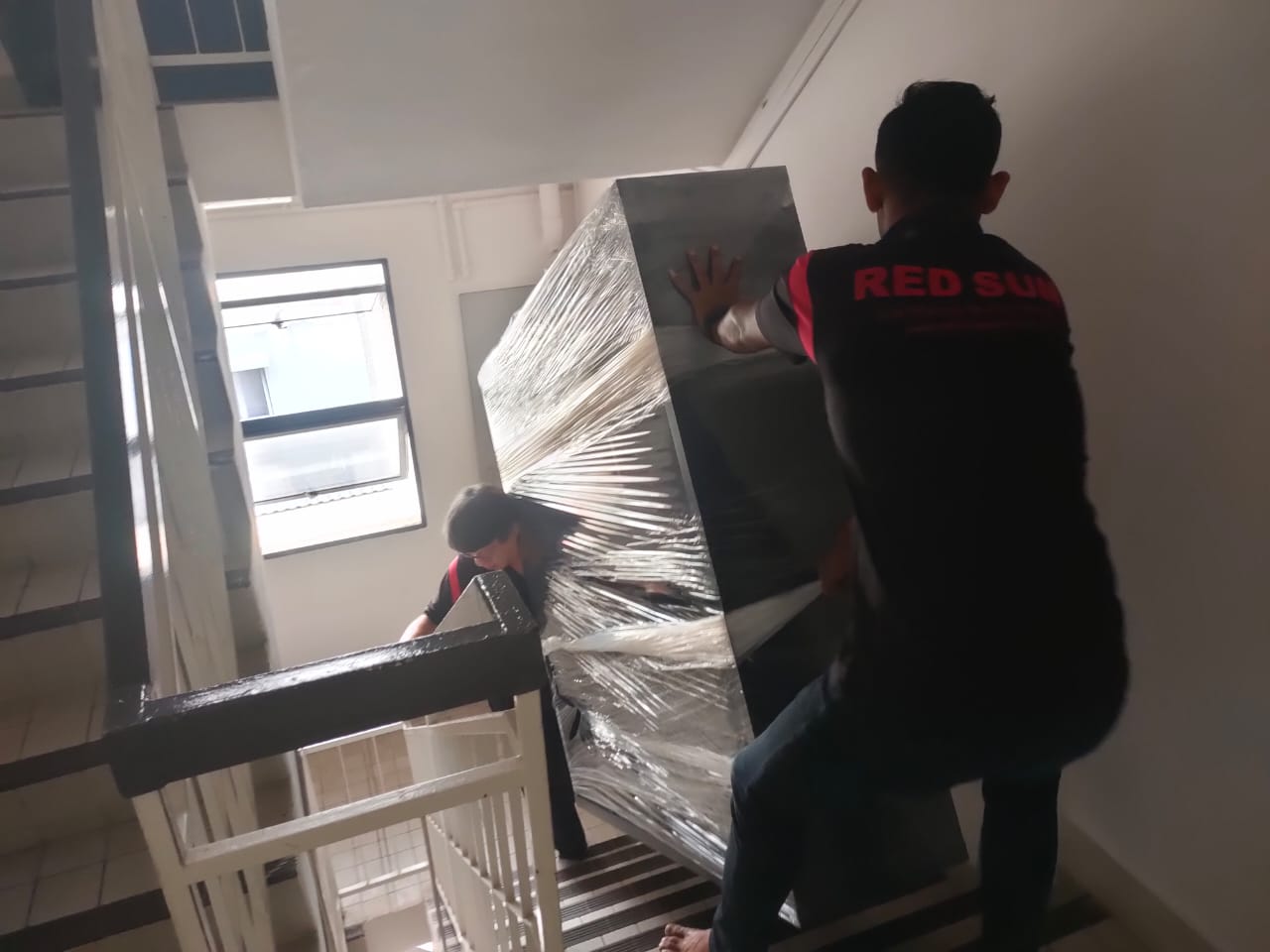
Professional movers securing furniture with protective wrapping before transport during a home move in Singapore.

Moving houses in Singapore requires meticulous planning to navigate tight condominium management rules and strict property handover deadlines.

  • HDB: book lifts if required, protect corridors, avoid blocking fire routes, and follow bulky disposal rules. Furthermore, make sure to apply for season parking before you move in and ensure you have fire insurance. 
  • Condo: submit MCST forms, pay deposits, reserve service lifts, prepare access cards, and observe timing rules.
  • Landed: plan parking, protect gates and driveways, and allow for multiple trips if access is narrow.

Downloadable or Copyable House Moving Checklist

4 Weeks Before

  • Confirm the moving date 
  • Shortlist movers
  • Declutter: donate, sell, recycle and dispose items
  • Measure furniture
  • Prepare inventory
  • Confirm property access requirements 

2 Weeks Before

  • Buy packing supplies
  • Start packing and label boxes by room/ space
  • Make lift reservations
  • Submit MCST forms and pay deposit
  • Apply for season parking (for HDB)
  • Arrange SP Group utilities
  • Notify key parties 

1 Week Before

  • Reconfirm the moving plans and details with the movers and property management
  • Finish most packing
  • Number and color code the boxes, and mark fragile items
  • Prepare essentials bags (1 for every family member)
  • Prepare a 1st night box
  • Plan furniture layout/ floor plan

The Day Before Moving

  • Clean the old property lightly
  • Clear corridors and pathways for easy access
  • Charge devices
  • Pack final items, color code and number the boxes
  • Disconnect appliances 
  • Prepare keys and remotes
  • Take property photos
  • Take utility meter photos

Moving Day

  • Guide movers
  • Keep valuables and important documents with you
  • Keep the essentials bag with you
  • Confirm loading and unloading priorities
  • Check every room/ do a final check
  • Keep track of approved moving times

After You Move In

  • Test utilities
  • Inspect items
  • Unpack essential
  • Recycle packing materials
  • Update the new address (within 28 days of the move with the ICA)

Keep this moving checklist on your phone or print it out and tick each task off as you complete them.  Download the PDF checklist. 

Plan Your Move with the Right Guidance

Having a checklist always helps, but larger households may need more detailed guidance. For broader planning, read our guide to house moving in Singapore or review moving costs in Singapore when budgeting.

Frequently Asked Questions

Most households should start drafting and using a moving house checklist 4–6 weeks before the move. Larger families, landed homes, and complex condo moves may need more time because approvals, packing, and disposal take longer.

A basic home moving checklist in Singapore should include dates, mover booking details, decluttering, packing, lift booking, utilities, address updates, final check, and post-move unpacking. Adapt the checklist to HDB, condo or landed properties as necessary.

The last items to pack before moving house are usually your daily essentials and frequently used items. This may include:

  • Toiletries and medications
  • Chargers and electronics
  • Important documents/ medical records
  • A few changes of clothes
  • Basic kitchen items
  • Cleaning supplies
  • Baby or pet essentials, if applicable

It is also useful to prepare a separate “moving day essentials bag” so you can easily access important items without opening multiple boxes after the move.

Pack clothes, toiletries, chargers, medication, medical records, valuables, snacks, and important documents. Keep the essentials bag with you at all times instead of placing it in the moving vehicle.

Number each box, mark the destination room, and record the contents in a spreadsheet. Pre-printed labels and color coded labels make tracking easier, especially if you have many boxes.

To prepare for moving day in Singapore:

  • Confirm the moving schedule with your movers
  • Reserve lift access or arrange lift padding if required by your condo MCST or Town Council
  • Ensure all cartons are properly labelled and sealed
  • Keep walkways and entrances clear for movers
  • Disconnect and prepare appliances in advance
  • Set aside valuables and important documents to carry personally
  • Prepare payment, parking arrangements, and contact details for movers if needed

Proper preparation helps minimize delays and makes the moving process smoother and more organized.

Planning a House Move in Singapore?

Let REDSUN Movers take the stress out of your relocation journey. From careful packing to smooth transportation and timely delivery, our experienced team is here to make every move simple, safe, and hassle-free. 

Whether you’re moving to a condo, HDB, or landed property, trust house movers Singapore  to help you settle into your new home with ease. Contact us today and move smarter with professionals you can rely on.

{ "@context": "https://schema.org", "@type": "FAQPage", "mainEntity": [ { "@type": "Question", "name": "Why do movers give different prices for the same job?", "acceptedAnswer": { "@type": "Answer", "text": "Movers may assume different access, packing requirements, manpower needs, and truck sizes. Some quotes include full packing, storage services, and dismantling, while others only cover transport. Always compare the scope of work and confirm what is included before deciding." } }, { "@type": "Question", "name": "Can a moving quote change after the site survey?", "acceptedAnswer": { "@type": "Answer", "text": "Yes. Reputable movers may adjust quotations after a site survey based on the actual moving volume, access conditions, or additional requirements. Any changes should be clearly explained and updated in writing." } }, { "@type": "Question", "name": "How many quotes should I get before deciding?", "acceptedAnswer": { "@type": "Answer", "text": "It is recommended to get several quotes for standard house moves and more for complex or international relocations. Comparing multiple quotes helps you understand market rates and evaluate movers based on pricing, responsiveness, and service quality." } }, { "@type": "Question", "name": "What hidden fees should I watch for?", "acceptedAnswer": { "@type": "Answer", "text": "Common extra charges may include stair carry fees, long carry charges, additional trips, packing materials, disposal fees, overtime, and weekend or holiday surcharges. Ask movers to clearly list all potential additional costs before confirming the move." } }, { "@type": "Question", "name": "Do office moving quotes differ from residential?", "acceptedAnswer": { "@type": "Answer", "text": "Yes. Office moving quotations are typically more complex because they may involve after-hours work, equipment handling, downtime management, phased relocation, and coordination with building management. Providing detailed office layouts and asset lists helps improve quote accuracy." } } ] }

Why Moving Quotes Vary in Singapore

If you have ever requested quotations from several moving companies in Singapore, you may have noticed that prices can differ significantly, even for what appears to be a similar move. Understanding why this happens can help you compare offers more accurately and avoid surprises on moving day, especially when evaluating a moving service Singapore provider. 

Key Takeaways

Moving quotes in Singapore vary widely due to factors beyond just distance, primarily driven by item volume, labor, and property accessibility. Here are the main points to keep in mind:

  • Quotations differ mainly due to scope (services included), property type, access conditions, timing, and special handling needs
  • Lower quotes often exclude services like packing, dismantling, insurance, storage services, or assume easier site conditions than actual
  • A site survey usually yields more accurate and transparent pricing with fewer hidden fees and unexpected charges
  • Moving costs in Singapore typically range from SGD 300 to SGD 3,000+, depending on property type and belongings volume
  • Getting at least three written quotes including a site survey is advised for the best price and to save money
  • Most movers calculate costs based on volume and manpower, not flat rates, explaining price differences

Why Do Moving Quotes Differ So Much?

Moving quotes vary because each mover prices the job based on the actual work involved: volume of items, access conditions, manpower required, distance, day of the move (weekend/ weekday), and extra services such as packing, storage services, disposal services, and additional services all count towards the final price. There is no fixed pricing model because no two moves are identical.

Here is why similar moves can produce very different quotations:

  • Most moving companies in Singapore calculate their pricing based on the volume of items being moved, rather than a flat rate
  • Each moving company may structure its quotation differently (by lorry load, by manpower hours, by item list, or as a bundled package)
  • Quotes for HDB, condo, landed properties, and office movers in Singapore jobs can look different because of building rules, lift access requirements, and loading bay restrictions. 
  • Some movers include protective wrapping, basic dismantling, and simple insurance by default, while others charge separately
  • Additional costs can arise from factors such as packing materials, storage needs, special handling for fragile or bulky items, weekend surcharges, last-minute bookings, or long carry fees
  • Price differences do not automatically mean someone is overcharging; often they reflect different assumptions about your move and level of service

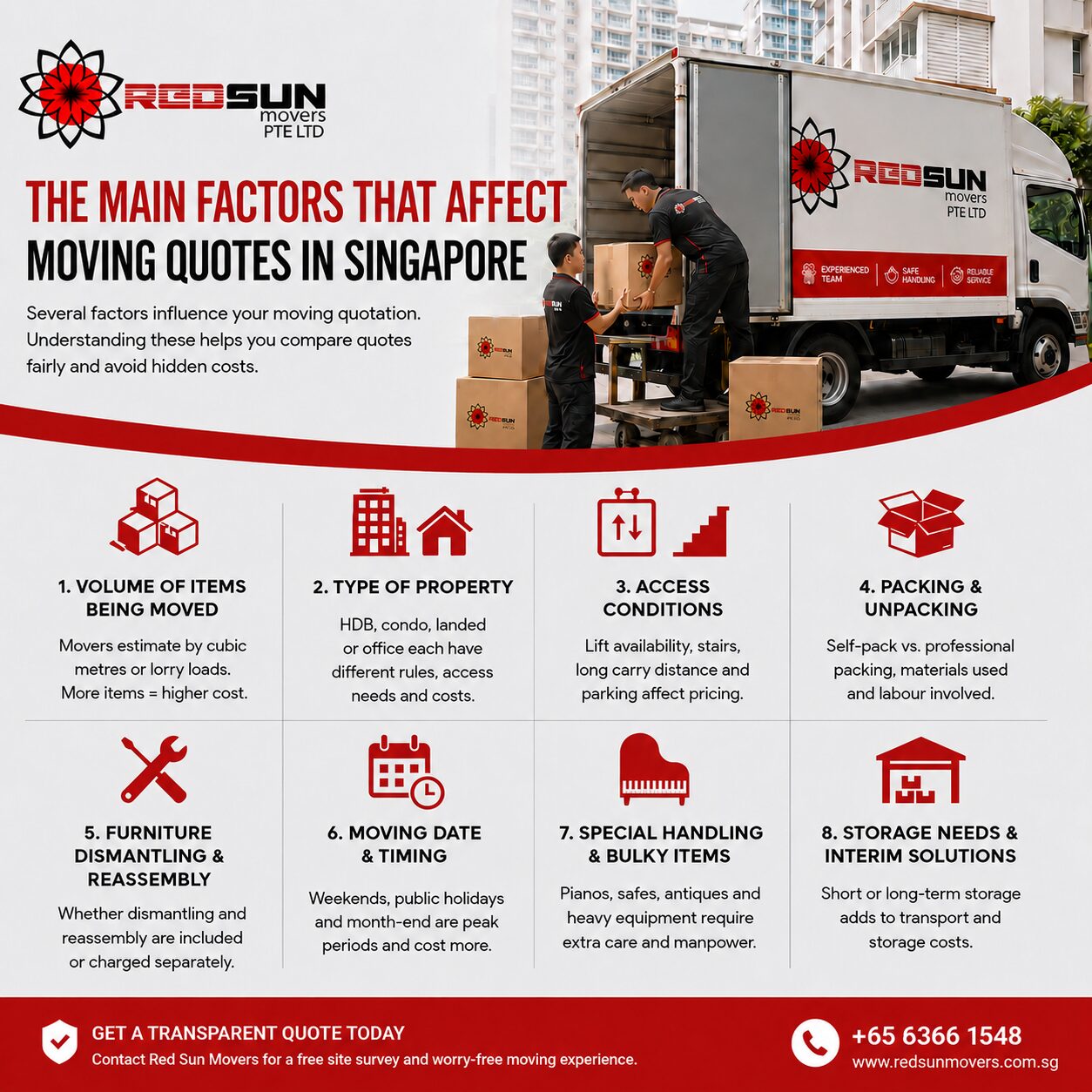
The Main Factors That Affect Moving Quotes in Singapore

Understanding moving quotes in Singapore


The following subsections break down the key factors that cause moving quotation differences. These factors apply to both residential moving and commercial moving, though with slightly different emphasis. For businesses, minimising downtime matters most, while homeowners often prioritize convenience and item safety.


Volume of Items Being Moved

Movers normally estimate by cubic metres or lorry loads, not just by how many rooms you have. A 2-room HDB move might equate to 10-15m³, while a 4-room resale HDB with wardrobes and appliances can reach 25-40m³  and therefore cost more. 

Key considerations include:

  • Dense items like books, files, and equipment fill space quickly, affecting estimates even if the actual square footage of the flat or office may looks small
  • Poor stacking can add 20-30% more to the number of trips required
  • Accurate inventories with photos help professional movers price more precisely and avoid last-minute top-ups
  • Room count alone does not determine the final cost
  • Most movers in Singapore base their costs on volume and manpower, so a clear inventory helps get an accurate quotation

Type of Property

The cost of moving is influenced by the type of home, with landed properties generally costing more due to factors like stairs and heavier furniture, which require more time and more manpower.

Property Type Typical Considerations Quote Impact HDB Flat Standardised corridors, lift access Lower base cost Condo MCST deposits, escorted entry, timing slots 15-25% higher Landed Homes Multiple floors, no lift, heavier furniture S$1,500+ base, 6-8 movers Office Loading bay hours, after-hours work, equipment Planning premiums apply

Condos may require refundable deposits (may cost up to SGD 2000), escorted access, and strict timing slots, which movers factor into their charges for risk and waiting time.

Access Conditions

How easily movers can access the unit from the lorry is a key reason why moving costs in Singapore can vary depending on the property’s specific conditions.

Common access issues that affect pricing:

  • Lifts vs. stairs: Movers charge extra if the building has no lift or if they must use stairs due to lack of lift access. 
  • If the moving truck cannot park close to the entrance and movers have to transport items over a long distance, a surcharge is usually applied.
  • Walk-up apartments in older estates add significant labour time.
  • Tight corridors or stairwells may require furniture dismantling before moving.

Accurate description of access conditions before quoting reduces the chance of disputes or day-of price changes.

Moving

Packing and Unpacking 

Professional packing services are often offered by professional movers for an additional charge. Allowing movers to handle the packing of items to ensure they are safely transported is advisable. However, quotes can vary by hundreds of dollars depending on the approach and materials used.

Service Level What’s Included Typical Additional Cost  Self-pack Customer packs all boxes None Basic packing Cartons, tape, basic wrap S$50-100 Full-service packing All materials, fragile wrapping, labelling  S$150-300+

Packing services, including materials like boxes, packing peanuts and bubble wrap, can typically add an extra cost of SGD 50 to SGD 200 or more to the overall moving expenses. Specialised packing for fragile items like monitors, lab equipment, or framed artwork significantly affects price.

Disclaimer: All prices provided are approximate only and subject to change based on box quantity, packing materials, fragile items, specialised wrapping, and actual packing time required. Please request a transparent quotation specific to your property and moving needs.

Furniture Dismantling and Reassembly

Quotes vary depending on whether dismantling and reassembly of bulky furniture are included or listed as optional add-ons, especially for clients engaging furniture movers Singapore. Common items requiring dismantling include:

  • Platform beds and IKEA wardrobes
  • Conference tables and server racks
  • Large shelving units and custom fixtures

Many moving companies provide handyman services to assist with furniture assembly and minor repairs during the moving process. Clear confirmation in the quotation about what will and will not be dismantled helps prevent hidden fees.

Moving Date and Timing

Quotations for the exact same inventory can change based on date/day and time. Moving during peak periods—weekends, public holidays, and month-end—are more expensive due to high demand and potential overtime pay for staff.

Peak demand periods in Singapore include:

  • Weekends 
  • Public holidays 
  • School holidays (May-July, November-December)
  • Month-end lease turnovers

Surcharges for moving on weekends or public holidays can add SGD 50 to SGD 150 or more per hour to the total moving cost. Last-minute bookings can incur additional fees. Confirming dates 4-6 weeks in advance gives a better chance at more favourable pricing.

Redsun Movers

Special Handling Requirements and Bulky Items

The presence of bulky items or high-risk items causes major differences between moving quotations. Special handling charges for items like pianos or antiques can lead to extra charges between SGD 50 and SGD 500, depending on the complexity of the move.

Examples of items requiring special handling:

  • Upright and grand pianos 
  • Large safes 
  • Commercial fridges and photocopiers
  • Lab equipment and antique solid-wood cabinets

Such items may need extra manpower, special trolleys, lifting equipment, or partial disassembly. Reputable experienced movers will provide transparent costing instead of surprise surcharges.

Storage Needs and Interim Solutions

Moving and storage services are commonly provided by moving companies to accommodate clients who need temporary space for their belongings during transitions. Adding temporary storage changes both the structure and amount of a moving quote. 

Storage considerations include:

  • Renovation delays or keys-handover gaps often require short-term warehouse storage
  • Temporary storage fees can range from SGD 50 to SGD 300, which may be necessary if there are delays in moving into the new home
  • Movers may charge separately for transport to storage, storage rental, and redelivery
  • A quote that includes storage will look higher than a simple point-to-point local move

Clear, itemised storage space costs with transparent pricing make it easier to compare offers fairly.

Why a Lower Quote Is Not Always Better

The cheapest moving quotation is not necessarily the best value. When choosing a moving company, it is important to consider their reputation and customer reviews, as these can provide insights into their reliability and service quality.

Risks of choosing based on headline price alone:

  • Lower quotes may exclude packing materials, dismantling, insurance coverage, disposal, or after-hours work
  • Underpriced jobs may be staffed with fewer movers or smaller vehicles, causing longer moving times and higher risk of damage
  • Some low-cost offers are based on optimistic assumptions about access (lift available, short carry, no stairs) and may be revised on-site
  • Removing old furniture during a move typically incurs an extra cost that may not be in the initial quote
  • Disposal services for unwanted items, including e-waste, are increasingly offered but often charged separately

Look beyond the headline price and consider reliability, clear scope, written terms, and reviews when comparing options from movers in Singapore. 

If you are planning a move and need a clearer quotation, Red Sun Movers can help you understand the scope, inclusions, and logistics involved for residential and house movers Singapore requests. 

What to Compare When Reviewing Moving Quotations

When reviewing multiple quotations, use this checklist to ensure fair comparison. A clear breakdown of fees in the moving quotation is essential to avoid hidden costs and ensure transparency in pricing.

Comparison Point What to Check Scope of work Door-to-door only, or includes packing, unpacking services, dismantling, reassembly, disposal? Manpower Number of professional movers assigned Vehicles Type and size (10-ft or 14-ft lorries), estimated trips Materials Boxes, tape, protective wrap, labels included? In what quantities? Conditions Surcharges for stairs, long carry, extra stops, waiting time? Exclusions What is explicitly NOT included? Storage Storage services itemised separately? Insurance What insurance coverage is provided? Disposal Fees for removing unwanted items?


For a broader overview of typical cost ranges, refer to our moving costs Singapore guide that explains what affects moving costs in Singapore across different scenarios. 

Questions to Ask Before Accepting a Moving Quote

RedSun Movers Access Conditions

Before accepting any quotation, ask these questions to reveal hidden fees and clarify scope:

  • Is packing and unpacking included, and for which items exactly?
  • Which furniture items will your team dismantle and reassemble, and are any excluded?
  • Do you charge extra for stairs, walk-up units, long carry from loading bay, or if lift access is unavailable on moving day?
  • Are there surcharges for weekends, public holidays, or starting before 9am or finishing after 6pm?
  • What happens if there are a few more boxes or an extra stop on the day – how will you charge for that?
  • What insurance coverage is provided for damaged or lost items?
  • Is there an additional cost for disposal of unwanted items?

It is advisable to engage movers who have expertise in dismantling, wrapping, and assembling items to ensure safe handling during the move. Always request a detailed, written quotation that lists all inclusions, exclusions, and potential variable charges. Businesses planning a commercial move may also want to review our office relocation services before comparing quotations. 

How to Get a More Accurate Moving Quote

To obtain the best price for moving services, it is advised to get at least three written quotations that include a site survey. Here is how to prepare:

  • Create a clear inventory list of furniture, appliances, boxes, and bulky items
  • Take photos or short videos of each room to help movers price accurately
  • Share property type and layout (e.g., “4-room HDB in (area), 12th floor, lift access” or “office on 20th floor, loading bay via basement”)
  • Disclose all special items upfront: pianos, commercial equipment, heavy safes
  • Request a site visit or remote video call walk-through for complex moves
  • Confirm the moving date as early as possible to secure better rates

When selecting a moving company, consider their ability to provide customized services that cater to your specific moving needs. Supervision of the moving process by experienced personnel can significantly enhance the safety and efficiency of the move.

Once you understand your requirements, you can shortlist a suitable moving service Singapore or house movers Singapore provider and request aligned quotations. 

Understand Moving Costs Before You Compare Quotes

Understanding typical local cost ranges by property type, distance, and service level helps make sense of why some quotes look high or low. Distance between locations also affects moving costs, with longer distances typically resulting in higher charges due to increased travel time and fuel usage.

For a more comprehensive understanding refer this moving costs Singapore guide. It explains the main cost factors and what typically affects moving expenses.

If you are planning your next Singapore relocation  or a reliable Malaysia relocation partner, we can help. Our experienced team at Red Sun Movers will work with you closely to set a realistic moving budget while ensuring you have a hassle free relocation. 


Frequently Asked Questions

Movers may assume different access, packing, manpower, and truck size. Some include full packing, storage services, and dismantling; others expect self-packing and simple transport. Compare line items and confirm scope before deciding.

Reputable movers adjust estimates after a survey based on actual volume and conditions. Quotes may rise if undisclosed bulky items or difficult access appear. Changes should be explained and documented. Always get updated written quotes after major changes.

Get several quotes for typical house moves, more for complex or international moves. Multiple quotes help spot outliers and understand market rates. Choose movers based on price, clarity, responsiveness, and site survey quality.

Extras often include surcharges for stairs, long carry, extra trips, packing materials, weekend or holiday rates, disposal fees, and overtime. Ask movers to list these clearly and confirm if fixed or variable. Transparency avoids disputes.

Office moves need after-hours work, equipment protection, and management coordination. Downtime and phased moves affect manpower and cost, making commercial quotes more complex. Businesses should provide detailed plans and asset lists for accurate quotes.

{ "@context": "https://schema.org", "@type": "FAQPage", "mainEntity": [ { "@type": "Question", "name": "Why do movers give different prices for the same job?", "acceptedAnswer": { "@type": "Answer", "text": "Movers may assume different access, packing requirements, manpower needs, and truck sizes. Some quotes include full packing, storage services, and dismantling, while others only cover transport. Always compare the scope of work and confirm what is included before deciding." } }, { "@type": "Question", "name": "Can a moving quote change after the site survey?", "acceptedAnswer": { "@type": "Answer", "text": "Yes. Reputable movers may adjust quotations after a site survey based on the actual moving volume, access conditions, or additional requirements. Any changes should be clearly explained and updated in writing." } }, { "@type": "Question", "name": "How many quotes should I get before deciding?", "acceptedAnswer": { "@type": "Answer", "text": "It is recommended to get several quotes for standard house moves and more for complex or international relocations. Comparing multiple quotes helps you understand market rates and evaluate movers based on pricing, responsiveness, and service quality." } }, { "@type": "Question", "name": "What hidden fees should I watch for?", "acceptedAnswer": { "@type": "Answer", "text": "Common extra charges may include stair carry fees, long carry charges, additional trips, packing materials, disposal fees, overtime, and weekend or holiday surcharges. Ask movers to clearly list all potential additional costs before confirming the move." } }, { "@type": "Question", "name": "Do office moving quotes differ from residential?", "acceptedAnswer": { "@type": "Answer", "text": "Yes. Office moving quotations are typically more complex because they may involve after-hours work, equipment handling, downtime management, phased relocation, and coordination with building management. Providing detailed office layouts and asset lists helps improve quote accuracy." } } ] }